The inaugural edition of “All is Yar’s Most Favorite and Noteworthy Classical Music Stuff of the Year”

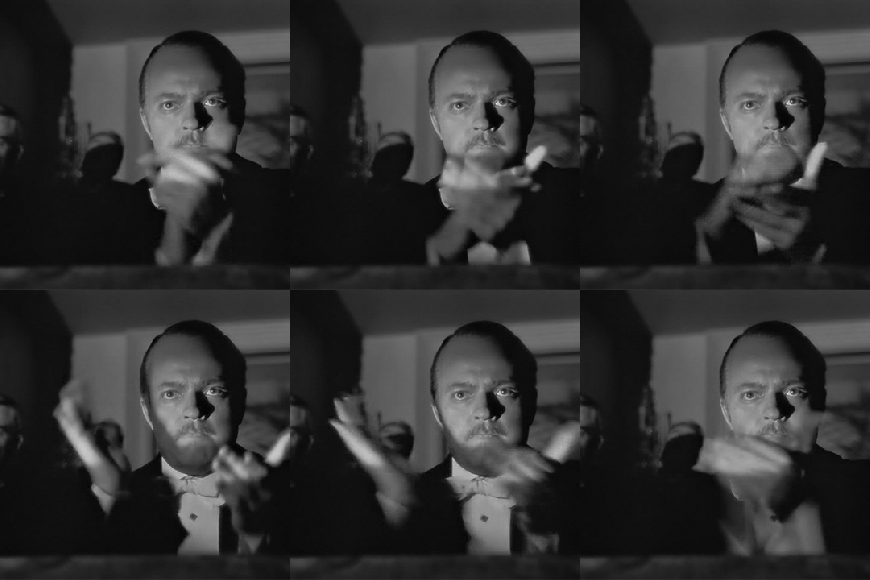
clapAs we reach the end of December, it’s traditionally time for a retrospective look at the year that is just completed.  Since 2012 was the first full calendar year of All is Yar‘s existence, it’s an especially important one for me.  I’ve been fortunate — dare I say “blessed” — to have been able to experience more performances than I would’ve guessed at the beginning of the year — most of them somewhere between really good and truly awesome.

After some very detailed number-crunching,  extremely scientific analysis, and deeply meditative internal reflection (OK, maybe more like some quality time with a green tea and some scotch), I decided to follow tradition and write-up a list of stuff I thought was worth mentioning.  So cozy up to a loved one, grab a glass of your favorite beverage, and get yourself ready for  . . . (cue trumpet fanfare) . . . the first-ever  ”All is Yar‘s Most Favorite and Noteworthy Classical Music Stuff of the Year”.

Best Orchestral Performance:  Simon Rattle conducting the LA Phil in works by Ligeti, Wagner, and Bruckner

  • Sir Simon led a performance so gripping, so absolutely awesome, it didn’t even matter that the concert featured three of my least favorite composers.

Favorite Concert(s) of the Year:  The Rite of Spring, a new Symphony from Steven Stucky, and some Bernstein to boot (Los Angeles Philharmonic, Gustavo Dudamel conducting)

  • First of all, we’re a talking Le Sacre du Printemps here, pretty much my favorite orchestral work ever.  Secondly, the performance by the Mr. Dudamel and the LA Phil was as good as I’ve heard from that combination, so good in fact that I had to see it twice (hence the parenthetical plural “Concert(s)” above).  Third, we got the added bonus of a bright new work from Mr. Stucky.  Fourth, did I mention the concert included Stravinsky’s  The Rite of Spring, which is pretty much my favorite orchestral work ever?

Best Performance of a Work I Don’t Need to Hear Again for a Long, Long Time:  Riccardo Muti and the Chicago Symphony do Franck’s Symphony

  • Really, CSO??  You don’t come to Southern California for more than a generation, and this is what you bring along?!!  I mean, it sounded great and all, but . . . come on, man!

Read more of this post

LA Master Chorale below their own high standards in program of Bach and Vivaldi

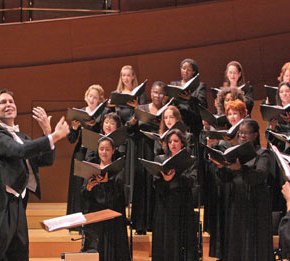
LAMasterChorale_C80173-068The Los Angeles Master Chorale’s December dance card was a bit more full than usual:  two concerts of holiday carols, a straight-up performance of Handel’s Messiah, providing soloists for a Messiah sing-along, and an evening of Vivaldi and Bach that was titled, “Rejoice!”  

I only had the opportunity to attend the Vivaldi/Bach concert, and judging from that single performance, I’d say that perhaps they were spread too thin.

It wasn’t an outright bad performance, and if you weren’t familiar with how well this world-class ensemble can usually sing, you may even have been inclined to have been impressed.

For me, however, it lacked polish and felt under-rehearsed.  The Master Chorale’s trademark purity of tone and impeccable vocal blend was largely missing from the evening.  Attacks and cut-offs could be rough.  There was even a point in the evening when one of the choristers who did double duty as a soloist got up and began to walk to the front of the stage — except it wasn’t his turn to sing yet.

Overall, it was far from their best effort.

Read more of this post

Five concerts, four conductors at different stages of their relationship w/ the LA Phil (part 4 of 4): Zubin Mehta, 50 years later

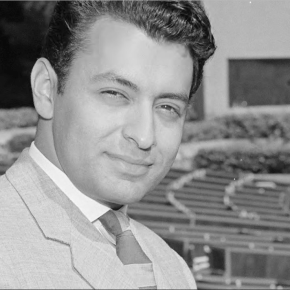
Zubin Mehta in 1961

Zubin Mehta:  the man, the myth, the legend.

While I’ve had a chance to see the other three conductors profiled in this series fairly early in their relationship with the Los Angeles Philharmonic, I was not around to see any of Mr. Mehta’s concerts as Music Director, let alone the ones early in his career.  I only know of his reputation, mostly via the two local critics of note who followed him the longest — Martin Bernheimer and Alan Rich.  They did not often see eye to eye, but when it came to Mr. Mehta’s conducting, they both seemed to have more misgivings than they had praise.  Beyond them, the stories were not that different:  dashing, charismatic  and adventurous on one hand; slick, perhaps even shallow, interpretations on the other.

My first live experience with Mr. Mehta leading the LA Phil (not counting the children’s concerts I attended as a grade schooler) was in a 1994 all-Mozart concert which featured the 32nd and 41st Symphonies and the Davidde Penitente.  I was impressed with neither his music making nor his demeanor.

Many years later, I read a scathing review that Mr. Rich wrote about a Vienna Philharmonic concert here in L.A. that Mr. Mehta conducted, and the late, great music critic’s words brought me back to that ’94 all-Mozart concert with this observation:

“Now he fixes the world with an angry glare, and oozes his way toward the podium as if he’d just peed in his pants, bearing on his stopped shoulders the remnants of a glory that might have been, but which has been too ofen wrongly steered.”  (Alan Rich, “Mehta-phobia,” So I’ve Heard:  March 12, 2009)

In those pre- All is Yar days, I responded on Mr. Rich’s blog with the following comment of my own:

Read more of this post

Hope everyone had a wonderful Christmas

It’s a slow start to Boxing Day this year, which is just the way I like it.  I’m still recovering from a wall-to-wall Christmas, which is, well, also just the way I like it.

Yesterday was a wonderful escapade that started with cooking, ended with two bottles of 2009 Ravenswood “Estate” Zinfandel (which were extremely drinkable even given their relatively young age), and in between featured stops at three different locations for LOTS of food with family and friends.  Unlike other years, there were no games (Monopoly, poker, craps) — must be residual fear of my mad skillz after having won $20 at Thanksgiving.

Anyways . . . the driving to and fro provided a couple more hours to listen to our iPod playing Christmas music on shuffle mode.  From that collection comes the classic diddy above.  The picture in the video is unrelated to the song, but is not completely irrelevant to the goings on here (though for the record, as much as I admire Bing’s work, I’ve always been partial to Carey Grant).

Happy Holidays and a Happy New Year.

Five concerts, four conductors at different stages of their relationship w/ the LA Phil (part 3 of 4): Esa-Pekka Salonen then and now

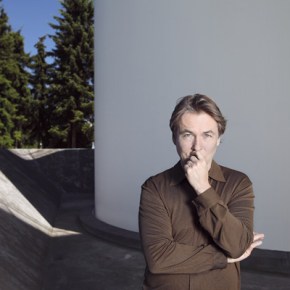
Esa-Pekka Salonen by SONJA WERNER When Esa-Pekka Salonen comes back to conduct the Los Angeles Philharmonic, you expect finely polished performances of complex programs.  In two weekends of concerts earlier this month, that’s exactly what you got and then some.  E-P was in town to help the orchestra celebrate Lutosławski’s centenary, with both sets of programs featuring major works by the much-admired Polish composer.

The first weekend’s Friday performance was  probing, athletic, and rich in detail.  Lutosławski’s First Symphony, with its traditional four movement structure, sounded closer to works by Shostakovich or Bartók — or his own Concerto for Orchestra – than the Second Symphony that he would pen two decades later.  The LA Phil playing was as crisp and whip-crack precise as it could be, making it sound like old hat rather than a premiere for both orchestra and conductor.  In addition, the orchestra’s brass gave the brief but raucous Fanfare for Los Angeles Philharmonic a no-holds-barred reading that pinged brightly throughout Walt Disney Concert Hall.

That orchestra and conductor slayed the Lutosławski should shock no one.  Mr. Salonen’s relationship with the orchestra goes back almost three decades, and the chemistry between the LA Phil and its Conductor Laureate remains superb.  In fact, E-PS’s 1984 debut with the orchestra included Lutosławski’s much thornier Third Symphony, and it was on the strength of those performances that  the relationship was allowed to blossom and grow to ESP levels:   As Mr. Salonen tweeted:  ”Such a joy to be back with my old band in LA. They sound great and still somehow read my mind. Deeply touched & humbled by the experience.”

His evolving skill with Beethoven is an entirely different matter.

Read more of this post

Ralph Sauer performs the Bach Cello Suite No. 1 on trombone

Ralph SauerFor your listening pleasure on this Monday evening:

Ralph Sauer, legendary former Principal Trombone of the Los Angeles Philharmonic, performs this rare — dare I say, “unique” — rendition of Bach’s ubiquitous Cello Suite No. 1.

Yes, I know. . . . You’re welcome.

—————

Photo credit:  S.E. Shires Co. Inc


Robert deMaine officially accepts LA Phil Principal Cello chair (UPDATED)

Robert deMaine:  MadMen'ed and Hockney'ed.
Robert deMaine

Coming directly from the man himself — or at least his Twitter account — is this short and sweet statement from Robert deMaine:

“I’m starting as Principal Cello in the Los Angeles Philharmonic officially on May 11. So excited!”

Let me be among the first to congratulate Mr. deMaine and the orchestra on this excellent news.  I am very much looking forward to having the chance to see and hear him full-time in Walt Disney Concert Hall and the Hollywood Bowl.

With a start date of May 11, 2013, it looks like his first subscription concert in his new job will be the May 17 semi-staged production of Mozart’s Marriage of Figaro with Music Director Gustavo Dudamel conducting.

UPDATE (10:31am PST):   Read more of this post

Andrew Bain and Dale Clevenger: two Principal Horns in very different situations

.

One of the many quotes from my recent interview with Danny Rothmuller, retired Associate Principal Cello of the Los Angeles Philharmonic, that didn’t make it into my original posts (Part 1 HERE and Part 2 HERE) was the following observation:

“French Horn is the only fallible instrument in the orchestra.  Any other instrument, if you play a wrong note, it’s your own fault.  But if a horn player misses and hits a clam, you can’t always blame them, and you kind of feel for them when it happens.” (Daniel Rothmuller)

So assuming that tolerance for horn miscues (even at the world-class level) is higher than it would be for other instruments, when does it cross the line from misfortune to malpractice?  Wherever that line is, an increasing number of people feel that the Chicago Symphony’s Dale Clevenger is getting there — if he hasn’t crossed it already.

Lisa Hirsch’s most recent post on Iron Tongue of Midnight mentions the latest online article chronicling  the list of grievences of the CSO’s legendary Principal Horn, and Lisa points out extra-musical issues which complicate the situation.

For my part, I sympathize with those hoping that such a well-regarded musician would step down gracefully and either take an emeritus position or retire outright.  At the same time, I’ve actually heard the sub-par playing about which the critics are talking.  In my review of the CSO’s appearance at Segerstrom Concert Hall earlier this year, I wrote:

Read more of this post

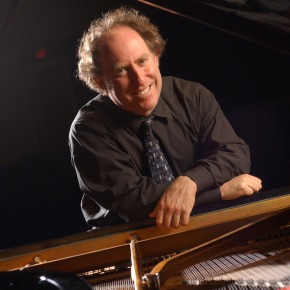
Jeffrey Kahane and LA Chamber Orchestra shed new light on familiar works

Jeffrey KahaneSaturday night’s Los Angeles Chamber Orchestra concert featured a first half with a rustic sensibility and a second half with an urban vibe.  Both halves were anchored by an American classic in a less-often heard rendition:

  • The country mouse portion featured Dvořák’s Serenade for Winds paired  Appalachian Spring Suite in Copland’s original 1944 version.
  • After intermission, the city mouse segment  began with Son of a Chamber Symphony by John Adams before ending with the original jazz-band orchestration of Gershwin’s Rhapsody in Blue.

The program wasn’t billed that way, but the links were very easy to make once you heard it all.  It was a crafty move by Jeffrey Kahane, the orchestra’s Music Director and conductor for the evening, who also did double duty on the piano for the Copland and Gershwin. A packed Alex Theatre crowd responded enthusiastically, even to the lesser-known works.  It was the latest example of LACO showing off their depth and range in diverse repertoire.

Appalachian Spring was particularly rewarding.  The work was commissioned by Martha Graham, and Aaron Copland wrote the score for her dance company without knowing what the story of this particular ballet would be about; but despite the composer having made no purposeful link between his music and Appalachia, the work has become the iconic invocation of an open, pre-industrial America.

The grand orchestration that is most commonly performed offers a broad, cinemascope rendition of this ideal.  In contrast, LACO’s performance of the original version had a raw, edgy quality that seemed to more accurately reflect the bleak challenges overcome by the rural-folk and American pioneers of the listener’s imagination.  And at a time when folk-inspired musicians such as Mumford and SonsThe Lumineers, and Avett Brothers have justifiably captured wide attention of the masses, Copland’s spare-sounding chamber scoring actually felt more current.

Read more of this post

Five concerts, four conductors at different stages of their relationship w/ the LA Phil (part 2 of 4): Lionel Bringuier and the latest Green Umbrella new music concert

Lionel BringuierThe first time I learned about Lionel Bringuier was in November 2006.  The late great Alan Rich wrote about how the powers-that-be at the Los Angeles Philharmonic at the time — among them, Esa-Pekka Salonen, Deborah Borda, orchestra musicians, and board members — were blown away by Mr. Bringuier and named him Assistant Conductor at the tender age of 20.

In the ensuing years, Mr. Bringuier has not stopped impressing people wherever he has gone.  Locally, he has been promoted twice, first to Associate Conductor, then in 2011, to the newly created position of Resident Conductor.  Further afield, he’s made repeated waves with notable guest gigs on both sides of the Atlantic before making his biggest splash yet a couple of months ago by being named the new Music Director Designate of the Zurich Tonhalle Orchestra.

His international profile and experience may be growing, but Los Angeles has probably had the best chance to watch him grow and develop vs. anywhere else in the world.  We’ve seen him conduct a broad range of repertoire under a variety of conditions:  subscription programs at Walt Disney Concert Hall; Toyota Symphonies for Youth educational concerts; Hollywood Bowl gigs with all of their quirks; and as a last-minute replacement — most memorably in 2010 when he took over conducting the Tchaikovsky Sixth Symphony after Gustavo Dudamel injured his neck mid-concert.  Under all circumstances, he has been unflappable, with interpretations that are interesting and enjoyable.

Read more of this post

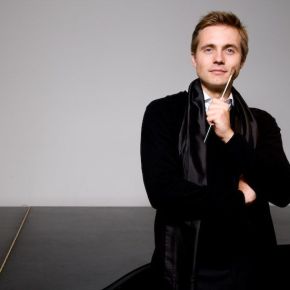
Five concerts, four conductors at different stages of their relationship w/ the LA Phil (part 1 of 4): Vasily Petrenko conducts Nielsen and Shostakovich; Trpceski plays Grieg’s Piano Concerto

Vasily_Petrenko_3_C_Mark_McNulty

Based solely on what I saw and heard a couple of weeks ago, I’d guess that Vasily Petrenko and the Los Angeles Philharmonic have a good thing going.

Throw in the fact that Rick Schultz said in the Los Angeles Times that Mr. Petrenko “made a deeply felt, unforgettable impression” at his January 2010 debut with the orchestra and that his two concerts at the Hollywood Bowl in 2011 were also well received, I’d bet that my guess is a pretty good one.

By themselves, a few years’ worth of return engagements certainly do not equate to any kind of long-term relationship (case in point — what the heck happened with Mark Wigglesworth?), but in this case it seems that the chemistry between Mr. Petrenko and the LA Phil is real.  Their combined efforts made for a glorious performance of the Shostakovich 10th Symphony, full of moments that were probing, eerie, and ultimately thrilling.  Mr. Petrenko wasn’t afraid to heighten the tension by pushing tempos a little here and drawing them out a little there, but he never went for cheap effects.  The LA Phil dug into the complex work, giving the conductor all sorts of colors and timbres to work with; the orchestra sounded wonderful, with many of the principals playing beautiful solo parts in the process.

I wish I had a chance to hear this Shosty 10 again.  And again.  In fact, I hope I have a chance to hear Mr. Petrenko and this orchestra again soon.

Read more of this post

%d bloggers like this: