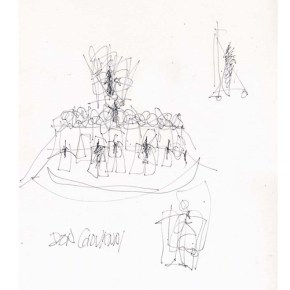
Frank Gehry’s sketches for “Don Giovanni” at Walt Disney Concert Hall

My guesses on what we’re looking at:

  • The big sketch in the middle has got to be the stage with various characters (I count 5 on the stage).  Behind and above them are two more figures, whom I think are some combination of Giovanni, the Commendatore, and/or the conductor.
  • On the bottom right is likely the Don himself
  • On the top right is . . . I have no idea.  One of the women?  The statue of the Commendatore? Some other part of the set?

Gehry’s sketches make total sense to me once I actually see what is built, but at this phase, it’s a bit tougher.  Perhaps some of you have a better sense.

(Image courtesy of the Los Angeles Times)

Lincoln Center “Great Performers” 2012-2013 season announced

New York’s Lincoln Center has announced the line-up for their “Great Performers” series in the coming 2012-2013 season.  Their press release (available HERE) leads by mentioning a visit by Gustavo Dudamel and the Los Angeles Philharmonic, specifically highlighting the New York premiere of John Adams’ oratorio The Gospel According to the Other Mary in a staged performance, before referring to any other artists in the season.

The press release goes on to mention that the staged version of the work will receive its world premiere in Los Angeles during the coming season, a tidbit not yet released by the local team.  Peter Sellars will direct. More details include:

Read more of this post

Official holder of an LA Opera “tweet seat”

Earlier today, I received notice from the folks at Los Angeles Opera that I’ve been given one of their “tweet seats.”   Not sure what that means?  Here’s  how they described it on their online application:

We are looking for a few awesome people who are active in social media to attend the final dress rehearsal of Simon Boccanegra and tweet, Facebook, G+ and blog throughout the entire performance. We want your authentic opinions and thoughts, and perhaps even a scene-by-scene recap of the onstage action. In other words, we’ll give you an opera ticket in exchange for your stellar social media skills!

As if I needed any more excuses to think highly of myself, LA Opera officially considers me one of “a few awesome people.”  Isn’t that nice?  Oh, and I get to hear Placido Domingo perform (and as a baritone, no less).  That most probably won’t suck.

I’ve gotta be honest — I didn’t think I’d get picked, so I haven’t yet considered how I’m going to approach this.  Total stream of consciousness or scene-by-scene summaries?  Twitter only or somehow tied to the blog?   I’ll have to think about it a bit and get back to everyone.

In the meantime, if you are on Twitter, please follow me at https://twitter.com/#!/MrCKDH.   Then, make sure to block off your calendars for the evening of Wednesday, February 8th.  I know you’ll all be waiting in breathless anticipation.

—————

Photo credit:  courtesy of Los Angeles Opera

Philharmonic Society of Orange County announces 2012-2013 season

Reblogged from Classical Life:

Click to visit the original post

Click here to see my article on the 2010-2013 season of the Philharmonic Society of Orange County, announced today.

photo: Clive Barda, courtesy of the Philharmonic Society of Orange County

WordPress has a new "Reblog" button. I thought I'd give it a try. Here's the latest 2012/2013 Season Announcement -- this one from the Philharmonic Society of Orange County, care of Tim Mangan's blog, Classical Life. UPDATE:  I just realized that the "click here" link in Tim's original post isn't functional after I reblogged (need to remember that little tidbit the next time I feel like reblogging).  So instead, click HERE  (no, really) to be redirected to the details of the announcement on OCRegister.com.

Promotions and additions in the LA Phil viola section

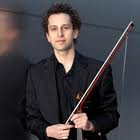
In case you haven’t been paying close attention to the Los Angeles Philharmonic’s roster (and who does, really?), the orchestra’s Assistant Principal Viola chair that had been vacant since the beginning of the 2011/2012 winter season is now filled.  Ben Ullery, a former Minnesota Orchestra player who joined the LA Phil viola section just last year, has been promoted to the position.  He played a trial earlier this season which apparently went pretty well.

Mr. Ullery becomes the second Colburn Conservatory alum to win a titled chair with the orchestra this season (as previously mentioned, Tao Ni won the Associate Principal Cello auditions).   With Rose Lombardo becoming the new Principal Flute of the San Diego Symphony and Nigel Armstrong being a featured soloist with the Los Angeles Chamber Orchestra, former Colburn students are doing quite well for themselves in the local scene as of late.

Michael Larco, Assistant Principal Viola of the Rochester Philharmonic, was the other finalist for the position; he played his trial during the first week of the “Mahler Project.”  Word on the street is that Mr. Larco was offered a section position within the orchestra, but has not yet officially joined the LA Phil.

—————
Photo credits:

  • Ben Ullery:  Los Angeles Philharmonic Association
  • Michael Larco:  Rochester Philharmonic

Quick thoughts on the 2012 Hollywood Bowl Season

It’s that fun time of year, a time full of hopes, dreams, and possibilities.   Yes, I’m talking about 2012/2013 Season Announcement, um, season. Lisa Hirsch has been tracking rumors and reality for a few weeks on her blog, Iron Tongue of Midnight; up until now, it’s been limited to opera companies.

The Los Angeles Philharmonic Association became the first major non-opera entity to make an announcement — not the LA Phil’s 2012/2013 Winter Season (to be announced Feb 7th), but rather the 2012 Hollywood Bowl Summer Season.  Their press release can be found HERE; the chronological listing of events is HERE.  Bob Thomas gives his $.02 on his blog, Class Act.

My top of mind reactions:

Read more of this post

Unexpected delight & disappointment: 2012 North American International Auto Show and 2012 Consumer Electronics Show

Yes, PLEASE!! -- The Lexus LF-LC Concept

I know everyone is anxious to talk about the big “Mahler Project” that the Los Angeles Philharmonic is putting on, but before I do this, I must digress.  While music is a huge interest of mine — certainly the biggest one that applies to this blog —  I have many others as evidenced on the menu bar above by every other topic to the right of “MUSIC.”  Every year in early January, I try to indulge two of these — gadgets and cars — in a big way by traveling first to the Consumer Electronics Show (CES) in Las Vegas and then to the Detroit Auto Show (or the “North American International Auto Show” as it is more formally called).  You’d assume that a trip to Sin City would be more worthwhile and interesting than one to the Motor City.  This year, you’d be wrong.

Read more of this post

Timeless like a broken watch: Marino Formenti in recital

“I always hated the Diabelli Variations,” writes Marino Formenti.  Coming from any other pianist, this would sound like a confession.

Marino Formenti is not “any other pianist.”

The Italian-born musician only began studying Beethoven’s meandering piano work at the recent request of Dean Corey, President and Artistic Director of the Philharmonic Society of Orange County.  The organization is in the midst of presenting all of Beethoven’s late works, and Mr. Corey is very familiar  with Mr. Formenti’s ouvre, going back to the late lamented Eclectic Orange Festival.  By bringing the new music specialist to Segerstrom Concert Hall to play this particular touchstone of Beethoven’s late period, Mr. Corey was clearly going for something a bit unexpected.

Read more of this post

Gershwin played on both coasts; recognizing a Strad blindfolded; some orchestral cabbage + mac & cheese

Composers George Gershwin and Brian Ciach: musical innovation via slightly different methods

The Los Angeles Philharmonic’s all-Gershwin season opening gala may have occured many months ago,  but PBS’s “Great Performances” is only now getting around to broadcasting the video from the concert — most of it, anyway.  Better late (and abridged) than never.

The first broadcast is this evening at 6pm Pacific Time (on KPBS and PBS SoCal, among other California stations), with repeats at odd hours throughout the weekend and into next week.  What you get to see is Gustavo Dudamel and the LA Phil in An American in Paris,  joined by Herbie Hancock in Rhapsody in Blue, and Mr. Hancock’s solo jazz abstraction of Someone to Watch Over Me.  Alas, the show is only one hour long, so what you will miss from the original concert is the orchestra performing the Cuban Overture and Mr. Hancock doing improvisations on Embraceable You.”

In addition to Mr. Hancock’s inspired solo turns, make a point of enjoying Michele Zukovsky’s slinky clarinet in the beginning of the Rhapsody, along with excellent trumpet work by Tom Hooten and Jim Wilt (in An American in Paris and Rhapsody in Blue, respectively).  Since the LA Phil has said that no DVD of this performance is planned for sale, go set your TiVo (or generic branded DVR) right now.  I’ll wait . . .

—————

If that isn’t enough Gershwin for you, or if you like to compare and contrast two different orchestra’s performance of the work, you’re in luck:  the New York Philharmonic’s New Year’s Eve concert which was broadcast on “Live from Lincoln Center” is still available for viewing online (click HERE).   The episode “expires” on Monday, Jan 9, so catch it before it goes away.

The concert includes Piano Concerto in F and Rhapsody in Blue, with Jean-Yves Thibaudet as piano soloist; also featured are incoming Principal Clarinet Roberto Morales, and the incomparable Phil Smith on trumpet (I’m glad the camera got some close-ups of his felt hat mute during the concerto).  Those two Gershwin pieces alternate with two Bernstein works:  the overture to Candide, and Symphonic Dances from West Side Story.  The NY Phil’s Music Director, Alan Gilbert, is the conductor.  In addition to the concert footage, the video features a worthwhile interview with Mr. Morales and his approach to the famous clarinet solo that opens the Rhapsody, plus some Q & A with both Mr. Thibaudet and Mr. Gilbert; Alec Baldwin tolerably serves as host and interviewer.

I thought Mr. Gilbert’s tempos dragged and his overall interpretation was too cool in all the pieces.   It’s as if he was holding back the players of the NY Phil, an orchestra that can cut loose with the best of them when allowed to do so.  Mr. Thibaudet sounded especially good in the concerto, though his improvisational moments in the Rhapsody sometimes sounded a bit awkward.  (In fairness, you could say — and many did — the inverse regarding Mr. Hancock’s own performance of the Rhapsody; namely, that his improvisations were the best moments and his attempts to follow the notes were his worst.)

—————

National Public Radio (NPR) caused a bit of a buzz a few days ago when All Things Considered ran a story about some professional violinists’ abilities — or lack thereof — to correctly identify the Strad among violins made by Stradivari, Guarneri, and contemporary luthiers.  Just to make it even more fun, the NPR website also lets everyone into the act:  they have two 19-second clips of violinist Christopher Joyce playing the same excerpt from the Tchaikovsky violin concerto, and challenge you to pick the Strad (click HERE to try it yourself — the correct answer is at the bottom of the article, so don’t read ahead if you aren’t planning to cheat).

Sam Bergman, blogger and violist with the Minnesota Orchestra, offers up some very interesting thoughts and observations of the “test” in a recent post.  He mentions that he, along with most of the other professional string players he knows, were able to pick the Strad out right away.  He goes on to make a number of other points, and links to many other related posts by the likes of Steven Isserlis and Alex Ross, among others.  Rather than have me attempt to summarize any further, click on the link and read his fine post for yourself.

—————

Speaking of the Minnesota Orchestra . . . in case you get saturated with Gershwin and want a little contemporary music instead, tonight’s Future Classics concert ( the “culminating event” of their Composer Institute, according to their website) is a doozy.

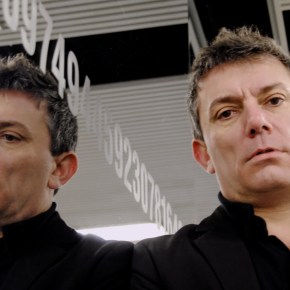
The up-and-coming composers to be featured are Michael Holloway, Andreia Pinto-Correia, Hannah Lash, Shen Yiwen, Adrian Knight, and Brian Ciach.  Full program notes and composer bios are HERE.  Ms. Lash’s blog posts about her experience leading to the concert can be found HERE.

I’m sure the whole program will be interesting, but the piece I really want to here Is “Collective Uncommon:  Seven Orchestral Studies on Medical Oddities” by Mr. Ciach.  What a great name for a piece — and each of the seven movements also have whimsically bizarre (OK, some might call them gross) titles like:

  • I.  ”Megacolon (Mensuration Canon)”
  • II.  ”The Progressive Ossification of Harry Eastlack (Variations on a Decending Bass)”

. . . but wait, there’s more!  Read Mr. Ciach’s program notes, and you get gems like this:

“Attempting to evoke these oddities brought new forms, instrumental pairings/transformations, “food instruments” and new instruments into my imagination. . . . The Megacolon calls for amplified ripped-open cabbages, stirred macaroni and cheese, and a cow moo can, all contributing to a large orchestral round on a long-winded musical subject evoking an intestinal tract.”

People, it doesn’t get much better than that.  Somebody has to program this thing on the West Coast.

As a bonus, you don’t even have to be in the Twin Cities to catch this work:  Minnesota Public Radio is kindly streaming it live this evening at 8pm Central Time (6pm PST or 9pm EST).   Click HERE to enjoy the veritable musical feast.

Wait.  That overlaps with tonight’s LA Phil Gershwin broadcast . . . thank goodness for TiVo.

RELATED POSTS

—————

Photo credits:

  • George Gershwin:  Virginia Tech Multimedia Music Dictionary Composer Biographies
  • Brian Ciach:  Courtesy of Indiana University

My musical resolution for the New Year: give Bruckner symphonies another chance (recommendations welcome)

Eeny, meeny, miny . . .

As I’ve mentioned before, I’m conflicted when it comes to Anton Bruckner’s music.  A cappella motets?  Absolutely love ‘em.  Choral works with an orchestra?  Sure.  But the symphonies?  Eh, well . . . I’ve tried, but now I usually make a point of avoiding them whenever possible.

We have recordings of a few of the symphonies in our collection:

  • 4th (Salonen/Los Angeles Philharmonic)
  • 5th (Haitink/Vienna Philharmonic)
  • 7th (Walter/Columbia Symphony)
  • 8th (one by Karajan/Vienna, another by Haitink/Concergebouw)

In addition, I’ve seen the 4th and 7th performed live. With all that previous exposure, I can appreciate his works on an  intellectual basis for its technical and sonic machinations — but they don’t grab me, say, like Stravinsky, Mahler, or Lutoslawski does (or to a slightly lesser extent, Shostakovich or Sibelius).

  • I can also appreciate the Ligeti Requiem for both intellectual and technical reasons, and I really have no desire to pay good money to ever see or hear that performed again.  In comparison, I’ve usually found Bruckner symphonies to be more tolerable, but less interesting.

In any case, I was enjoying some of the Bruckner choral works over the holidays, and I figured that I needed to reconsider his symphonic ouvre.  Therefore, as a New Year’s resolution,  I’ve decided to make an effort to “get into” Bruckner.

I’m gonna start with the 9th symphony, partly because I want to try something I don’t know at all, and also in anticipation of seeing it performed live later this year with Simon Rattle conducting.  Haven’t yet decided which recording to go with, so . . .

If anyone wants to recommend a specific (perhaps “better” or more “definitive”) recording of the piece, please feel free to offer it up.   I’d be eternally grateful.

%d bloggers like this: