Happy Birthday, Gioachino Rossini (with classic video footage)

On this leap day in 1792, the great Italian composer, Gioachino Rossini, was born.

He wrote over 30 operas along with many other works, but he is probably best known for The Barber of Seville. So in honor of Signore Rossini’s 220th birthday, I offer you The Barber of Seville the way most of us were probably introduced to it: care of Bugs Bunny and the absolute genius of Chuck Jones and Carl Stalling.

Below is the complete, unabridged classic, “The Rabbit of Seville.” (If the YouTube video is a little too grainy for you, click HERE for a much higher quality version on a different site that WordPress won’t let me embed directly into this post.)

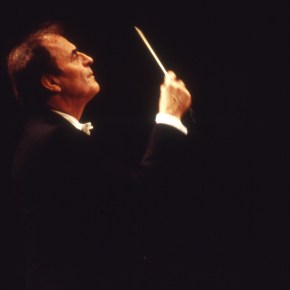
Charles Dutoit leads a refreshing night with the LA Phil

A  program of Stravinsky, Debussy, and Prokofiev may still be considered adventurous in some concert halls, but for many years, it was the norm at Walt Disney Concert Hall.  The 20th Century French and Russian composers seemed to turn up on the Los Angeles Philharmonic’s programs as often (if not more so) than Mozart, Brahms, or Strauss.  Alas, the orchestra’s current music director, Gustavo Dudamel, has had a much stronger penchant for Austro-Germanic works during his tenure up to now, so this type of programming has been increasingly left to guest conductors.

After nearly two months of performing Mahler, it was time for the LA Phil to cleanse our collective orchestral palate with a very different kind of program.  On hand to do the purification was Charles Dutoit, one of the handful of eminence gris to whom the orchestra has been regularly turning over their podium over the past decade.  The Swiss conductor’s aristocratic demeanor and strong reputation in this repertoire made him an ideal fit to lead the orchestra in this change-of-pace program on their first weekend back from their Venezuelan excursion.  On Saturday night, he and the LA Phil did not disappoint.

Read more of this post

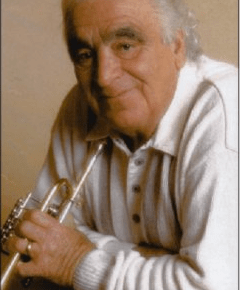
RIP Maurice André

The word “great” is often overused, but there can be no doubt that it applies to Maurice André. The French trumpeter, renowned worldwide for his artistry and leadership, has died at the age of 78.

He won his first prize for trumpet in 1953.  It was the first of many more awards and honors to come, among them were the French National Order of the Legion of Honor and Honorary Member of the Royal Academy of Music (UK).

He also made more than 300 recordings, many of which are still available.  His last public concert was on October 9, 2008 at the St. Nazaire Cathedral in Beziers, France

Here is a video of the great trumpeter playing the third movement of the Hummel trumpet concerto:

—————

Photo credit:  Klaus Heinrich, courtesy of Nelly Eschke (www.maurice-andre.com)

LA Opera’s Albert Herring is a light-hearted king of a comedy

Sid (Liam Bonner) and Albert (Alek Shrader) taking in an eyeful of Nancy (Daniela Mack)

Quick — imagine an opera, any opera, in your head.  I’ll wait. . . . I’m guessing that you probably came up with large-bodied singers standing in one place belting out big arias in a foreign language (probably Italian, German, or French) over the strains of a big orchestra; lots of murder, suicide, rape, and other unpleasantries, with at least one character taking a full act or two to actually  go through the dying process; random deities, the supernatural, and a whole host of unrealistic events are typical; and almost always, the more you know before you step foot in the opera house, the more you’ll enjoy and the better off you are (ugh, homework).  It is big and can be intimidating.  Sound familiar?

Albert Herring is NOT that kind of opera.  Benjamin Britten’s lone comedy is a human-scaled, English-language bit of theatre which, in Los Angeles Opera’s production that opens tonight, proves to be a thoroughly approachable experience.  There is very much to admire and enjoy, regardless of whether one is an operatic veteran or novice.

Most of all, it’s funny.  Truly funny, with that special brand of wry humor the British seem to possess in droves.  In this case, the shy, unassuming Albert is unexpectedly chosen as May Day Festival king when it is decided that the girls of the town are a little too, um, worldly (nudge nudge, wink wink, say no more).  ”Want virgins, not trollops!” declares Loxford grande dame, Lady Billows (don’t we all).  Then someone decides to spike King Albert’s May Day punch, he sows his proverbial wild oats, and the rest is comic history.

Once again, I was asked to occupy one of the LA Opera’s “tweet seats” at their final dress rehearsal, and as such, was highly encouraged to share my thoughts on the whole experience.  I’ll post about the night’s tweet seat particulars later, but for now, a review of the performance:

Read more of this post

RIP Lorin Levee, LA Phil Principal Clarinet

According to KUSC’s Twitter feed, Lorin Levee, Principal Clarinet of the Los Angeles Philharmonic, has passed away.  He was 61 years old.  The information was retweeted by the LA Phil, so I’m guessing that the sad news is accurate.  Thoughts, prayers, and condolences to his family, friends, and colleagues.

No additional details, andthe orchestra has not yet issued an official media release.  As soon as they do, I’ll pass them along.

Mr. Levee joined the orchestra in 1976 as bass clarinetist.  He was promoted to principal in 1981 by Carlo Maria Giulini.

He has been prominently featured on many of the orchestras recordings, including the Rachmaninoff 2nd Symphony conducted by Simon Rattle and Gershwin’s Rhapsody in Blue conducted by Michael Tilson Thomas.  More recently, he could be seen on video in Gustavo Dudamel’s 2009 inaugural concert as Music Director, most especially during that concert’s performance of the Mahler 1st Symphony.

UPDATE (12:58PM PST):  This from the LA Phil’s Facebook page . . .

It is with great sadness that we pass on the news that our Principal Clarinet, Lorin Levee passed away yesterday. He fought a long and courageous battle with a fatal blood disorder; a battle so valiant that he played his final concert with us only on January 8. Lorin joined the orchestra in 1976 as our bass clarinetist and in 1981 won the position as Principal. He was a great clarinetist, a dedicated member of our New Music group, and had appeared with the orchestra as a soloist on numerous occasions. This is a real loss for us all.

UPDATE (4:04PM PST):  details from the Los Angeles Times of music to be played tonight in his honor:

A concert on Thursday at Walt Disney Concert Hall will be dedicated to Levee. The orchestra has added an extra piece to the program — Ravel’s “Le Jardin Féerique” (The Enchanted Garden) — in honor of the musician. In addition, Deborah Borda, president of the L.A. Philharmonic, is scheduled to speak.

—————

Photo courtesy of the Los Angeles Philharmonic

Mardi Gras wine: 2009 Melville Estate Pinot Noir – Sta. Rita Hills

imageMrs. CKDH had asked for some Pinot Noir to go with the Mardi Gras meal she was preparing, so I poked around the wine “cellar” (read as “dedicated closet for wine in our garage”) to see what I could find.  I was surprised to find a bottle of 2005 Cambria “Julia’s Vineyard” in amongst the various ’07, ’08, and ’09 Pinots.  Cambria “Julia’s” is one of our everyday favorites — reliably tasty, smooth, and relatively inexpensive — but it’s not one I like to keep around for very long because it doesn’t hold up for very long.  Sure enough, I pulled the cork, tasted it, and, well . . . not so much.  I let it sit in the glass for another 20 minutes to see if that would help, and it didn’t, so I sadly poured all of it down the drain.

Having gotten burned on an older bottle, I went in the other direction and pulled a bottle from the most recent purchase I had made:  2009 Melville Estate Pinot Noir – Sta. Rita Hills (winemaker’s notes HERE).   We had picked up two bottles of it, plus two more of ’09 Melville “Carrie’s” Pinot; since I really want to give the “Carrie’s” some time to develop, I decided to open one of the regular “Estate” bottles.

In short — it’s yummy, but it’s still young.  Quite tight in the nose and on the palate.  Definitely fruity, and definitely Sta. Rita Hills, but very short finish.  I’m gonna wait until next year before I try the second bottle since I’m sure it’ll develop more back-end with a little more time lying down.

That’s okay, it’ll be worth the wait.  Besides, I have some ’07 Rochioli that is begging to be opened, and I can’t risk waiting too long and having to pour THAT down the kitchen sink.

Back in the LA Opera Tweet Seat saddle tonight

I’m headed back to the Dorothy Chandler Pavilion tonight to tweet-up Los Angeles Opera’s production of Benjamin Britten’s comedy, Albert Herring.  Things are pretty much the same as they were for Simon Boccanegra, except for two notable differences:

  • The evening begins with a back stage, behind-the-scenes tour
  • Photography will no longer be permitted

The hashtag for tonight’s festivities is “#LAOHerring” for all who are interested in joining in the fun.  If you haven’t started following me on Twitter already, just push the “Follow @MrCKDH” button on the right side of this page.

Related posts:

—————

Photo credit:  courtesy of the Music Center

Chicago Symphony barrels its way through Orange County

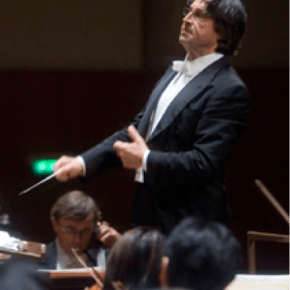
Last Friday, Riccardo Muti and the Chicago Symphony made their long-awaited visit to the Southland with a one-night stop at Segerstrom Concert Hall in Costa Mesa.  The whole affair had a “take it or leave it” feel,  beginning with the curiously obscure program of works by Honegger, Mason Bates, and Franck, and ending with Mr. Muti giving a compact “bye-bye” wave from the podium before the orchestra walked off the stage mid-applause without playing an encore.  There were smiles on many  of the musicians faces, including the maestro, but they seemed to reflect merely  polite contentment, without much indication that anyone on stage was having much fun.  It all seemed to coincide with Mr. Muti’s declarations that orchestral performances are art, NOT entertainment — as if they cannot be both.

Thankfully, the music-making itself was uniformly excellent.  If the three pieces being performed weren’t familiar, they were accessible.  More importantly, they provided the CSO an opportunity to flex their muscles, and the orchestra responded by playing with the power and panache for which they are famous.  You’d probably expect this from the brass, but it was present throughout the ensemble, most especially in the unanimity of the strings from top to bottom.  This was orchestra as monolith, and even if that meant individual sections or players lacked their own personality,  one still couldn’t help but be impressed with the sound.

Read more of this post

Dance this mess around: LACO’s Baroque Conversations No. 2 has all the right moves

An example of Beauchamp-Feuillet dance notation

If I were to look at a random cross-section of my favorite bits of music across genres, much of it — mazurkas by Chopin, Le Sacre du Printemps, New Order 12″ remixes, even the cheeky  Party Rock Anthem by LMFAO — is inherently dance music.  Baroque music in particular is riddled with dance-based themes.  A quick look at the titles of some of the most popular works from this era, say Handel’s Water Music, and you find minuets, riguadons, and bourrées; we hear this music all the time, but what do the associated dances actually look like?

Read more of this post

Muti on conducting new music and conducting in general; reviews from CSO’s concerts in SF

Mason Bates: Composer - DJ

Tonight, the Chicago Symphony arrives in Southern California after too long an absence.  The antici . . . pation is finally coming to an end.  You’ve downloaded your free MP3 of Franck’s Symphony in d minor, listened to it intently, and now you’re ready for the real thing.  A few last minute bits of fun:

Read more of this post

Ad majorum Dei gloriam: LA Master Chorale radiant in sacred music by Bruckner & Stravinsky

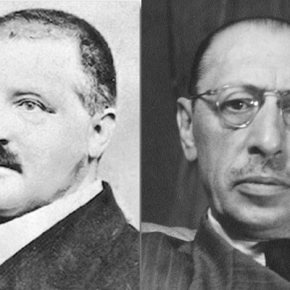
Anton Bruckner and Igor Stravinsky

Grant Gershon and the Los Angeles Master Chorale have spent the better part of a month helping the Los Angeles Philharmonic with their Mahler Project.  With their Disney Hall roommates moving on to Venezuela for the rest of the “Project,” conductor and chorus have collectively moved on in their own way without having to leave home on Sunday — to the music of Bruckner (Mass No. 2 in e minor and Os justi meditabitur sapientiam) and Stravinsky (Symphony of Psalms).  At first blush, it seemed to be an odd pairing as the two composers share few stylistic similarities; however, Mr. Gershon found common ground by creating a program devoted entirely to sacred music.  Moreover, the contrasting works allowed the Master Chorale to show off different sides of its personality, resulting in a diverse evening of radiant singing.

Read more of this post

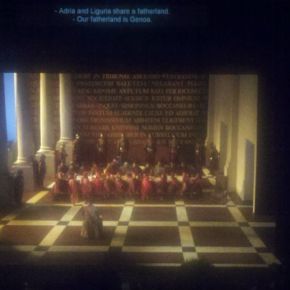
LA Opera’s Simon Boccanegra: the view from — and of — the Tweet Seats

Los Angeles Opera’s production of Verdi’s Simon Boccanegra opens today, with Placido Domingo in the title role of pirate turned Doge of Genoa.   As previously mentioned, I was offered one of LA Opera’s inaugural “tweet seats” for last Wednesday’s final dress rehearsal.  Normally, I wouldn’t be writing about a rehearsal at all, let alone doing so while the action was occurring; however, the whole point of the exercise was to do just that.

So here’s how it went, one both sides of the proscenium:

Read more of this post

Chicago Symphony coming to California; download free MP3 of Franck symphony to celebrate

Riccardo Muti and Cesar Franck

The mighty Chicago Symphony Orchestra is coming to California next week, their first West Coast visit in decades.  The impetus for their visit is to help the San Francisco Symphony celebrate their centennial, and since they made it this far, they’re making additional stops in Costa Mesa, Palm Desert, and San Diego.  The CSO Brass will also be appearing at the University of Redlands.

Where they won’t be visiting is Walt Disney Concert Hall, despite the fact that the LA Phil is away in Venezuela and the hall is vacant more than usual during that week; if one were to believe in the existence of a rivalry between the two orchestras, perhaps this is one more example of it.  Of course, the orchestra is not appearing anywhere else in Los Angeles County (e.g. Royce Hall, Ambassador Auditorium, Cerritos Center for the Performing Arts), so perhaps the Chicagoans just don’t like LA — go figure.

Tim Mangan interviewed the orchestra’s Music Director, Riccardo Muti, for the Orange County Register (read it HERE, and be sure to click through the slideshow).  Brian Lauritzen’s own interview with maestro Muti aired on KUSC-FM last Saturday, Feb 4, and has been archived online (click HERE to listen to the audio stream).

The CSO will be bringing two different programs on tour:  in San Diego and Palm Desert, they’ll be performing Schubert (music from Rosamunde plus the Symphony No. 9) and a new work by Anna Clyne, while Pacfic 231 by Honegger,  a new work by Mason Bates, and the lone symphony of Cesar Franck will be done in Orange County; San Francisco gets both programs (with an additional Honegger work for good measure).

In honor of their visit, or perhaps to get yourself ready for their visit, take a few minutes to download a free — FREE! — mp3 of a live recording of the Symphony in d minor by Cesar Franck, done by the Royal Concertgebouw Orchestra conducted by Mariss Jansons:

Read more of this post

Warming up the thumbs: LA Opera Tweet Seat, here I come

In about two-and-a-half hours, I’ll be sitting in the Loge section of the Dorothy Chandler Pavilion watching the final Los Angeles Opera dress rehearsal of Simon Boccanegra, sharing my thoughts in real time with the world, 140 characters at a time.

  • The easiest way to follow along is to go to my twitter page:  https://twitter.com/#!/MrCKDH .  If you want to see the comments from all of the “tweet seaters,” the hashtag is #LAOBoccanegra.
  • If you’re interested in following the action without going to Twitter, I’ve included a “tweet feed” on the top right of this blog.  It doesn’t refresh on its own, so you’ll have to refresh the webpage from time to time.
If you have any questions or clarifications about the goings-on, please feel free to send them to me and I’ll answer as quickly as I can.  Pictures are allowed, video isn’t.


Read more of this post

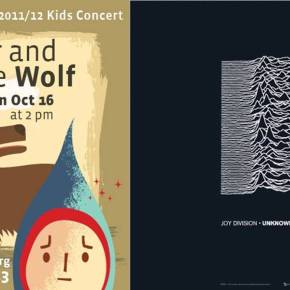
The not-quite-sure-if-it’s-public domain: Prokofiev, Joy Division, and confusion over who can do what for how much money

I recently finished jury duty, and I’ve been in a bit of a jurisprudential kinda mood ever since.

Given all of the recent brouhaha about SOPA (and yes, it was definitely a brouhaha — not a kerfuffle and much bigger than a hubbub), I’m a bit surprised that there hasn’t been more discussion in the classical music blogosphere about the recent U.S. Supreme Court decision about intellectual property rights.  It’s not every day that Prokofiev and  ”Peter and the Wolf” are mentioned directly by the justice writing the majority opinion.

If you want to know why there’ll be less Shostakovich or Stravinsky or Bartok being performed in the future, you’ll want to read more below.

Coincidentally, the past week also saw a different sort of musically-related intellectual property dust-up, this time involving Disney (the corporation, not the concert hall) and the fans of the post-punk band, Joy Division.  The folks at Disney are no strangers to intellectual property battles; however, this time was a little different. . . .

Read more of this post

%d bloggers like this: