Boston’s Handel and Haydn Society brings one of their namesake’s oratorios out of obscurity

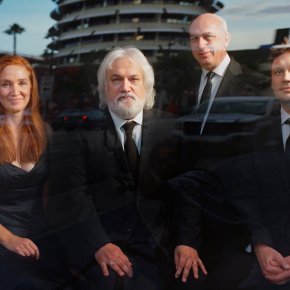
Handel and Haydn Society

Quick, name a Handel oratorio besides Messiah. . . . Not that easy, is it?

They aren’t exactly common fare, and I’m willing to bet that few of you would have come up with Jephtha, especially if Harry Christophers and the good folks at the Handel and Haydn Society  (aka “H&H”) hadn’t decided to resurrect it and bring it with them on their first California tour since 1996.  The Bostonian performing arts organization had given its U.S. premiere way back in 1855, but haven’t taken it off the shelf since 1867.

Given H&H’s pedigree with this rarity, I made my way to Walt Disney Concert Hall to see what they’d do with it and whether this late Handel work deserved to be kept in the dark as much as it has been.  Despite an excellent effort by the whole crew under Mr. Christophers’ impressive leadership, I understand why Jephtha isn’t lighting up concert stages on a more regular basis.

Read more of this post

Jacaranda’s latest concert highlighted by 4handLA’s piano rendition of “The Rite of Spring”

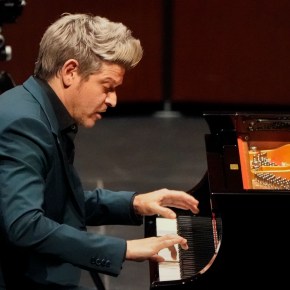
4handsLAThe folks at “Jacaranda, Music on the Edge” are on a bit of a roll.  The seats at Santa Monica’s First Presbyterian Church (AKA “First Preb”) were almost all full and the crowd was enthusiastic.  The program, billed as “Thresholds:  The Scandals of 1912-13″ was chock-a-block with works from the Second Viennese School; however, in this centenary year of Le Sacre du Printemps (The Rite of Spring), the big draw seemed to be a performance of the piano four-hands version of Stravinsky’s masterpiece.

Piano soloists for the evening were Danny Holt and Steven Vanhaewaert, who perform together as “4handsLA.”  The duo made their Jacaranda debut in 2009 playing The Rite, and given their magnificent performance this time around, it makes complete sense that they were asked to perform it again.

Direct comparison between orchestral and piano versions of any work can often be dicey given the different capabilities of the instruments, but all things considered, this was a performance that had the same bite, mysteriousness, and raw primitivity that you’d want from the fully orchestrated version.  Messers. Holt and Vanhaewaert deftly managed all sorts of manual contortions and gymnastics to bring the work to life, all while drawing a wide array of textures and timbres out of the single grand piano.    When it was done, the ovation they received was easily the loudest and most sustained of the evening.

Read more of this post

Jacaranda offers a stimulating evening of music by Eötvös and Ligeti

Peter-Eotvos_MusikFabrik-c-Kai-Bienert_12A few years ago, I was  at Walt Disney Concert Hall to see James Conlon conduct the Los Angeles Philharmonic in a concert of works by Prokofiev.  Sitting right in front of me were two gentleman, one older and the other younger, speaking a European language I did not recognize.  Whatever they were saying, they were deeply engaged in what seemed to be music-related conversation before and after each work and during intermission, even occasionally whispering and gesturing towards the stage as the music played.  The older gentleman was particularly fond of Principal Oboe Ariana Ghez’s playing, applauding extra vigorously when she took her solo bow.

The younger gentleman turned out to be Gregory Vajda, Resident Conductor of the Oregon Symphony, in town to replace an indisposed Lionel Bringuier to conduct one of the orchestra’s Green Umbrella programs which featured the work of prominent Hungarian composer Péter Eötvös.  The older gentleman turned out to be the composer himself.

Before the end of the concert, I introduced myself to Mr. Vajda.  In turn, he introduced me to Mr. Eötvös. Though the composer didn’t say anything in English to me, he smiled and shook my hand.  I wished them both well in their upcoming gig . . . and missed their concert two nights later despite the best of intentions.  I was always bummed out that I didn’t get a chance to hear any of the famous composer’s music despite having met him in person.

Fortunately, I had the chance to finally make up for it last Saturday when Mr. Eötvös returned to Southern California to participate in the latest program by “Jacaranda, music at the edge” featuring two of his works, including  the U.S. Premiere of Schiller:  energische Schönheit written in 2010 and co-commissioned by Jacaranda.  Also on the program were three works by his compatriot, György Ligeti.

I was far from the only one drawn to this concert. Santa Monica’s First Presbyterian Church was packed, with extra seats shoved wherever the room could be found.  Attendance was so high that they ran out of programs.  It was an enthusiastic crowd, and all were treated to some excellent performances of stimulating music.

Read more of this post

The inaugural edition of “All is Yar’s Most Favorite and Noteworthy Classical Music Stuff of the Year”

clapAs we reach the end of December, it’s traditionally time for a retrospective look at the year that is just completed.  Since 2012 was the first full calendar year of All is Yar‘s existence, it’s an especially important one for me.  I’ve been fortunate — dare I say “blessed” — to have been able to experience more performances than I would’ve guessed at the beginning of the year — most of them somewhere between really good and truly awesome.

After some very detailed number-crunching,  extremely scientific analysis, and deeply meditative internal reflection (OK, maybe more like some quality time with a green tea and some scotch), I decided to follow tradition and write-up a list of stuff I thought was worth mentioning.  So cozy up to a loved one, grab a glass of your favorite beverage, and get yourself ready for  . . . (cue trumpet fanfare) . . . the first-ever  ”All is Yar‘s Most Favorite and Noteworthy Classical Music Stuff of the Year”.

Best Orchestral Performance:  Simon Rattle conducting the LA Phil in works by Ligeti, Wagner, and Bruckner

  • Sir Simon led a performance so gripping, so absolutely awesome, it didn’t even matter that the concert featured three of my least favorite composers.

Favorite Concert(s) of the Year:  The Rite of Spring, a new Symphony from Steven Stucky, and some Bernstein to boot (Los Angeles Philharmonic, Gustavo Dudamel conducting)

  • First of all, we’re a talking Le Sacre du Printemps here, pretty much my favorite orchestral work ever.  Secondly, the performance by the Mr. Dudamel and the LA Phil was as good as I’ve heard from that combination, so good in fact that I had to see it twice (hence the parenthetical plural “Concert(s)” above).  Third, we got the added bonus of a bright new work from Mr. Stucky.  Fourth, did I mention the concert included Stravinsky’s  The Rite of Spring, which is pretty much my favorite orchestral work ever?

Best Performance of a Work I Don’t Need to Hear Again for a Long, Long Time:  Riccardo Muti and the Chicago Symphony do Franck’s Symphony

  • Really, CSO??  You don’t come to Southern California for more than a generation, and this is what you bring along?!!  I mean, it sounded great and all, but . . . come on, man!

Read more of this post

Salonen, Philharmonia bring a vivid “Wozzeck” to Walt Disney Concert Hall

Esa-Pekka Salonen is certainly among the most popular of classical musicians world-wide, but here in Southern California, it’s on a slightly different level.  You’d expect the current Conductor Laureate and former Music Director of the Los Angeles Philharmonic to have a strong following among the locals, and sure enough, he got a loud and prolonged ovation the moment he walked out onto the Walt Disney Concert Hall Stage.

But if I needed an even better indication of how truly deep his appeal runs around these parts, I got it from an unlikely source. As I pulled into the parking structure underneath Walt Disney Concert Hall this past Tuesday evening, the parking attendant tossed a stub onto my dashboard and asked me, “Are you here to see Esa-Pekka?  He’s great, isn’t he?”

Yes.  Yes, he is.  Even a guy stuck in a booth four stories beneath Grand Avenue knows it.

Tuesday night, Esa-Pekka the Great brought the Philharmonia Orchestra into WDCH, a quick one-night stop before heading further south to Costa Mesa and eventually San Diego.  Of the three programs he and his London cohorts brought on tour, Los Angeles got the most challenging one:  a semi-staged performance of Berg’s landmark opera, Wozzeck.  Only someone as truly great as Mr. Salonen would have the cajones to bring such a work on tour AND be able pull it off as magnificently as he did.

Read more of this post

They are the knights who say Niehaus: Milwaukee Symphony names Principal Trumpet as new President & Executive Director

Finally, some good news on the orchestral administrative front.

The Milwaukee Symphony offered up a one-two punch with their press release today, announcing not only a balanced budget but also the appointment of Principal Trumpet Mark Niehaus as the MSO’s new President and Executive Director.  According to the MSO:

Read more of this post

Going out with style: Tokyo String Quartet bids a fond farewell to Chicago

This past Tuesday, the Tokyo String Quartet played what first violin Martin Beaver said would almost certainly be their last concert at the Ravinia Festival.  In all likelihood, it will also be their final appearance anywhere in the Chicago area.  With Kazuhide Isomura (founding viola)  and Kikuei Ikeda (longtime second violin) deciding to retire, the whole ensemble is calling it quits after the 2012/2013 season.  It was “an evening full of meaning for us,” according to Mr. Beaver.

That I was there to experience it was a confluence of lucky events.  A week before, I didn’t know I’d be in Chicago.  The day before, I wasn’t sure if I’d be attending.  That morning, a massive thunderstorm rolled through the region, complete with hail and some not-messin’-around wind causing widespread damage and some power outages.

Around lunch time, the rain stopped, but I got a weather alert on my phone warning of “Severe Heat” with temperatures between 100 and 104 degrees with a heat index of up to 110 degrees once you factored in the humidity;  however, this turned out to be a warning for Wednesday, not the night of the concert  By the time I arrived at Ravinia around 6:30pm, the skies had cleared and the temperature was a very SoCal-like mid-70′s with moderate humidity.  Nothing would get in the way of the chance to see this concert.

Lucky me — and very lucky, too, for the near-capacity crowd inside Martin Theatre and the many others picnicking outside.  The Tokyo Quartet treated everyone to an evening that was enjoyable on so many levels.

Read more of this post

DSO streaming Mahler 5th, with Manny Ax playing the Mozart 22nd

Happy Friday.  In case you don’t make it out to any concerts this weekend, the concert can come to you:

Between now and Monday at 12noon Eastern Time, the Detroit Symphony is streaming their recent performance of Music Director Leonard Slatkin conducting  the Mahler Fifth Symphony and the Mozart Piano Concerto No. 22 with Emanuel Ax serving as soloist.  Click HERE, enter a little bit of registration information, and voila!  You’re in.

Read more of this post

A tale of two percussionists and the Boston Symphony (updated)

An article in Boston magazine recently posted on their website tells the tale of two percussionists and their attempts to join the Boston Symphony.

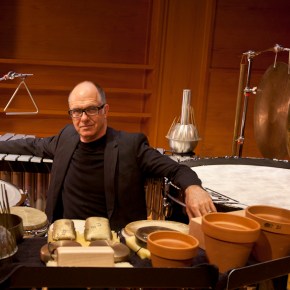
The bulk of the story follows Michael Tetreault, a Colorado musician who is trying to fill one of the two vacancies in the BSO’s percussion section.  There is also time spent with Lee Vinson, whose recent departure from the orchestra created one of the open seats for which Mr. Tetreault was vying.

The generalities discussed in the article about auditioning for a major orchestra will not be new to anyone who is familiar with the process. Indeed, every city with a professional orchestra sees their local press publish one article of this kind every decade or so.   In this case, you have to look past the lopsided boosterism for the BSO in Jennie Dorris’s writing:  she rightly touts the orchestra’s artistic merit, wonderful hall, and large endowments; but conveniently ignores the fact that it’s missing a Music Director since its last one has had to step down after multiple injury-plagued and cancellation-filled seasons, and it has no obvious prospects to take over any time soon.

If you’re willing to take that and a bit more with a pinch of salt, it’s compelling — and a little sad — to read about these two particular musician’s travails.  Mr. Tetreault’s regimen in preparation for his big audition seems a tad extreme, but it seems to follow the writer’s notion of the orchestra:  the orchestra is so extremely good that even extreme audition prep may not be good enough.  There are also some interesting quotes from a retired BSO percussionist about his own audition back in the day.

The full article can be found HERE.  If it doesn’t load right away, or if the subsequent pages give you an error message, be patient and try again in a minute.  I’m guessing Boston is getting more hits on this article than they expected, and their servers are having a hard time handling it.

UPDATE (6/30/2012):  conductor Kenneth Woods has a lengthy response on his blog (HERE), with interesting contributions in the comments section given by Mr. Tetreault himself (beginning HERE) comparing the differences in getting an orchestral job in the US vs. the UK.

Anniversary of Bernstein’s last day as NY Phil Music Director

Care of the folks at Composers Datebook at American Public Media:

On today’s date in 1969, Leonard Bernstein conducted his last concert as the Music Director of the New York Philharmonic. Bernstein had been named the orchestra’s Music Director in November of 1957, and was the first American-born and trained conductor to hold the position.

So for baseball fans, these were Bernstein’s “stats” as of May 17, 1969: He had conducted 939 concerts with the orchestra, more than any other conductor in its history. He had given 36 world premieres, 14 U.S. premieres, 15 New York City premieres, and led more than 40 works never before performed by the orchestra.

To listen to the Composers Datebook  program streaming online, click HERE.

It’s not a competition, but just for comparison, here are Esa-Pekka Salonen’s stats after his 17 year tenure as Music Director of the Los Angeles Philharmonic ended in 2009:

  • Commissioned over 54 new works
  • Conducted 120 world and U.S. premieres
  • Served as music director longer than anyone else in the orchestra’s history, leading the orchestra in 973 concerts and 23 tours.
Just to add one more parallel:  upon retirement, Mr. Bernstein was given the title of “Laureate Conductor” and is still officially listed by the NY Phil as such; Mr. Salonen was given the title of “Conductor Laureate” the last day he was the LA Phil’s Music Director.

—————

Photo credit:  Bob Cato (www.leonardbernstein.com)

Classical music marketing done right: behind the SLSO’s “Save Powell Hall” campaign

As I’ve mentioned in the past, classical music marketing and advertising can be a thankless job.  If you think it’s easy, you try finding something new to say about  music that’s been around for hundreds of years.  Go ahead, I’ll wait. . . . See?  Not exactly a piece of cake.

No one likes doing the same old thing, but I can’t really hold it against those organizations that fall back onto the two most popular  ways to build interest and excitement about your typical orchestral concert:  hype the warhorse and/or hype the big-name personality, usually with one or more exclamation points:  Beethoven’s 5th!!  YO-YO MA!!!

Obscure programming creates a tougher challenge, but also provides an opportunity to be more creative.  And by far, the best orchestral marketing and advertising effort I’ve seen lately — probably ever — is St. Louis Symphony’s “Save Powell Hall” campaign.

Take a deep breath and relax.  There is nothing actually wrong with the orchestra’s historic home — the campaign aims to create buzz for this coming weekend’s performance of Prokofiev’s Scythian Suite.  It is attention-grabbing, clever, and multi-faceted, brilliant in concept and perfectly tongue-in-cheek in execution.  But has it been effective?  Given the alarmist nature of the tagline, has there been any negative backlash?

A campaign this good demanded  more attention, so I spent some time chatting with Jonna Robertson, Vice President of Marketing for SLSO, to get those questions answered and to find out more about the campaign.

Read more of this post

A worthwhile Wednesday: “Spring Recital 2012″ by Radu Pieptea and Bryan Pezzone

Radu Pieptea

One of the benefits of living in a “big city”  is that arts and entertainment options are relatively frequent and easy to come by.  This provides both opportunities and challenges to both audiences and performers.

  • For audiences:  how do you choose to spend your valuable time and money?
  • For performers:  how do you break through the clutter to gain an audience for your work?
  • How does the right audience find the right performer?

As much as I love living in Southern California, I have to admit that it is easier on audiences and performers alike to find each other in older, more traditional cities in Europe and the East Coast.  Locals and tourists in London or NY can easily discover an interesting concert for little or no expense just by walking around, whereas our spread-out 20th Century version of a metropolis makes it much harder to stumble upon such things or make spontaneous decisions to attend them.  There has to be something about performers, program, and price to make one willing to overcome freeways, paid parking, and a mid-week concert date.

Such was the case this past Wednesday evening in a recital by violinist Radu Pieptea with pianist Bryan Pezzone.  They offered a varied program of five works that included two that I particularly like (Prokofiev’s Sonata No. 1 and Jascha Heifetz’s transcription of Gershwin’s Three Piano Preludes) at a price everyone could appreciate:  free.

Read more of this post

Save Powell Hall — the video

See for yourself what the St. Louis Symphony is up against. . . .The horror.  The horror.

Do your part today to help Save Powell Hall.

Save Powell Hall

Save Powell HallThe St. Louis Symphony implores you:  Save Powell Hall.  You have until April 14th.  Do it now, before it’s too late. . . . If you have no idea what I’m talking about, click HERE.

Has there ever been a better, more clever campaign by any orchestra?

No.  No, there hasn’t.

Kudos to the SLSO.  I only wish I could fly to Missouri to support them.  Since I can’t do that, I’m this close to sending them a $22 check on general principles.

Utter and complete brilliance.

Absurdity for all ages: Long Beach Opera and LA Phil’s Toyota Symphonies for Youth

At first blush, a matinee at Long Beach Opera (LBO) would seem to have little in common with one of the Los Angeles Philharmonic’s Toyota Symphonies for Youth (TSFY) educational concerts.  If you knew that one had programmed a double-bill of surrealist operas by Poulenc (The Breasts of Tiresias) and Martinů (Tears of a Knife), while the other was designed around The Planets by Gustav Holst — well, you may think I was a little whacky (note:  I am, but that is beside the point).  Before this past weekend, I would have thought the same thing.

As it turns out, both programs ended up having more elements tying them together than one would have predicted.  Humor?  Check.  Violence?  Check.  Unrequited love? Check.  Science wrongly applied and later acknowledged as such?  Check and check.

There were certainly differences —  the opera chorus’s fully clothed, Kama Sutra-esque demonstration of multiple sexual positions likely being the most graphically obvious — but by Sunday night, I couldn’t help but reflect on the two events being equal halves of an unexpected whole weekend of absurdist comedy.

Read more of this post

%d bloggers like this: