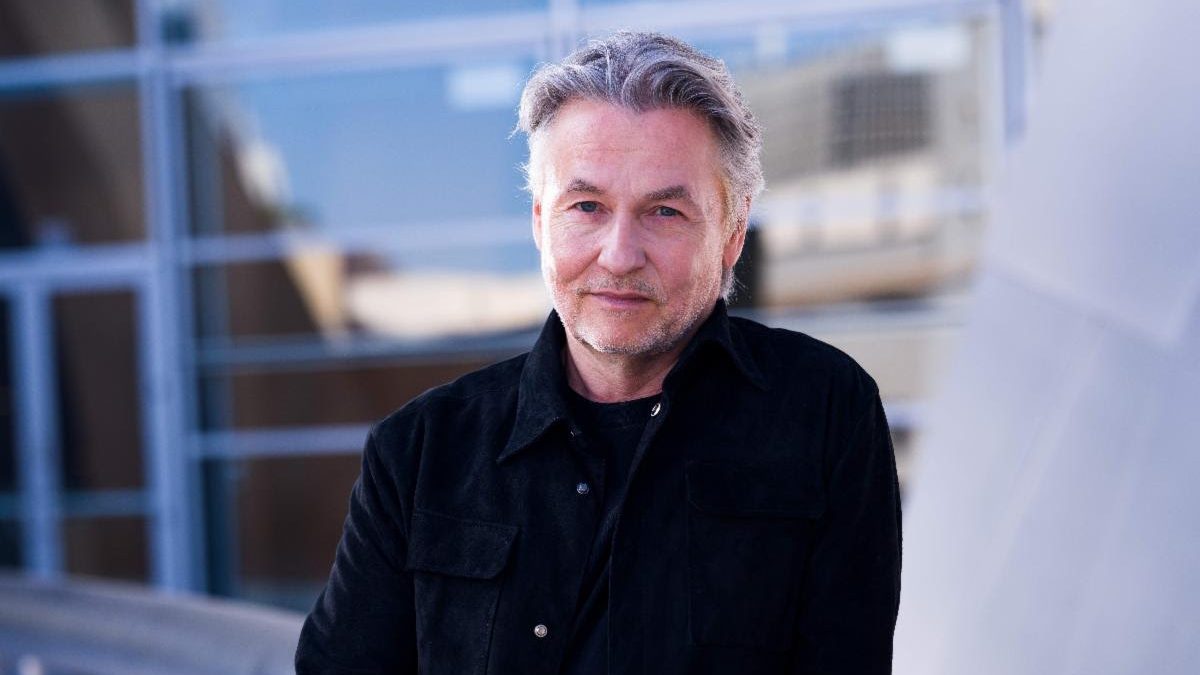
Last year, when I wrote this piece about the Los Angeles Philharmonic’s search for a new Music Director once Gustavo Dudamel’s tenure ends in 2026, I said, “If I ruled the world, I’d put Esa-Pekka Salonen mostly in charge while I took my time to find the right permanent replacement.”
Turns out, I’m not the only one who thought that.
Last week, the LA Phil announced that Mr. Salonen would be the orchestra’s first Creative Director, and also that “[t]he search for the LA Phil’s next Music Director is ongoing.” (Full press release HERE)
What exactly will Mr. Salonen be doing in his new LA Phil job? According to the press release, “Beginning with the 2026/27 season, Salonen will conduct and curate approximately six weeks of concerts with the LA Phil and focus on multi-disciplinary projects, festivals and the innovative programming for which the orchestra is renowned.”
But wait, there’s more. Around the same time, the Philharmonie de Paris appointed him to be its Creativity and Innovation Chair and Principal Conductor of the Orchestre de Paris. Collaborations between the Los Angeles and Paris organizations will ensue in 2027, revolving at least initially around a new Salonen International Conducting Fellowship, ballet commissions, joint festivals, and “a new project featuring immersive experiences that combine music, media, and technology.” . . . Yes, AND . . . that sounds a lot like the kind of stuff he wanted to do as Music Director of the San Francisco Symphony but couldn’t. (Sorry not sorry, Bay Area classical music fans)
One other tidbit mentioned: “the Music Director and Creative Director roles will be complementary to each other.” Translation: even if/when there’s a new boss in the orchestra, Mr. Salonen will still be around and keeping his new title. We can only hope.
Sounds great. And yet, the press release left many questions unanswered. Fortunately, after I raised them with the good folks at the LA Phil, they kindly answered most of them. Here’s that info and my thoughts on what that means:
Q: Would Mr. Salonen be keeping his Conductor Laureate title?
A: Yes. “Salonen will keep his Conductor Laureate title along with being Creative Director starting 26/27”
Q: As Creative Director, will Mr. Salonen have any authority or responsibility regarding the hiring of musicians to fill vacant orchestra chairs? If not, can you clarify who will have that authority/responsibility once Gustavo Dudamel steps down as Music and Artistic Director?
A: “Salonen will not be involved in the hiring of musicians.” Later, they added, “The musicians will oversee the hiring process in the absence of [a Music Director].”
Q: Will Mr. Salonen be involved in any programming decisions regarding the orchestra outside of the six weeks he’ll be on the podium?
A: “Salonen will only oversee programming for the weeks he is with the orchestra and that is all.”
Q: Will John Adams keep his title of Creative Chair, and if so, how will his role differ from Mr. Salonen’s?
A: “John Adams will keep his title of Creative Chair and will continue his artistic advisory for programs like Green Umbrella. Salonen as Creative Director role will focus on multi-disciplinary projects, festivals and other innovative programming.”
Conclusion: Creative Director is a quasi Principal Conductor
On its face, “Creative Chair” is not the same as “Principal Conductor” in name or even in duties. Principal Conductor implies breadth and standard repertoire. Creative Chair is much more specific, and I’d imagine the only way Mr. Salonen would be programming, say, Brahms or Tchaikovsky in his new role is if there were some extra-musical component to the performances — dance, multimedia, or otherwise.
By comparison, as Daniel Barenboim was stepping down from the Chicago Symphony in 2006, that orchestra named Bernard Haitink its Principal Conductor instead of hiring a new Music Director right away and gave the 77-year old Dutchman responsibilities to “provide advice on musical matters” on top of his podium duties. Additionally, the CSO elevated Pierre Boulez from Principal Guest Conductor to Conductor Emeritus, with Wynne Delacoma of the Chicago Sun-Times writing at the time that he would “participate in auditions and work with the orchestra on personnel matters that might arise.” Based on the LA Phil’s answers to my questions above, Mr. Salonen will be doing neither of those things.
Yet there are more similarities than the different titles might indicate. Mr. Haitink’s CSO appointment had him conducting only four to six weeks of subscription concerts per season, and Mr. Salonen’s new appointment lines up with that. While that amounts to roughly half the number of winter season concerts a Music Director usually leads, it still provides the LA Phil with an important amount of continuity and consistency. And just like the CSO being able to have big names like Messrs. Haitink and Boulez to brag about during their interregnum, so will the LA Phil with Esa-Pekka Salonen and Zubin Mehta (Conductor Emeritus). To add to the PR coup, it sounds like every appearance by Mr. Salonen will be more than your typical concert, so there will be even more for the world to talk about whenever he’s on the podium.
The biggest surprise for me was that neither of the former Music Directors holding titles today (Messrs. Salonen and Mehta) will be involved in filling empty chairs in the orchestra. Whether that’s a good or bad thing is a matter of personal preference, I’m sure, though I don’t think this is problematic per se. The Berlin Philharmonic is legendary for giving its Principal Conductor exactly zero say in who gets into the orchestra. The Metropolitan Opera Orchestra famously does not allow “no hire” auditions if at least one musician is qualified by the hiring committee.
Moreover, a non-trivial amount of whatever personnel drama has existed in this and other orchestras over the past couple of decades has been when Music Directors and musicians clash over hiring and tenure decisions (see, for example, the Seattle Symphony and Gerard Schwarz in 2007 . . . or, more recently and locally, the LA Phil attempts at hiring Principal Oboes from Europe in 2017 and 2022); putting musicians exclusively in control will certainly mitigate that. That said, if there were internal disagreements on a preferred candidate or sound (ahem, Principal Oboe in 2017 and 2022), the Music Director had the final say for better or worse; I hope that the lack of one doesn’t deepen any extant rifts.
Bottomline: it sounds like Mr. Salonen will be serving the function of a Principal Conductor even if his actual title is different.
More questions
Still, these answers raise more questions. Just a few that pop to mind:
- So what exactly will the musician hiring requirements be once there is no Music Director?
- Usually, a majority or slight super-majority of hiring committee members have to “qualify” candidates that form the pool of potential people the Music Director can hire — or not as has sometimes happened. With no Music Director, will the qualifying candidate with the most votes get the nod automatically?
- Will there be multiple rounds of voting, one to qualify, and another to hire, with minimum vote thresholds different for each round?
- If more than one qualified candidate gets an equal number of votes, who breaks any ties?
- How much of this, if any of it, is already addressed in the current Collective Bargaining Agreement?
- If I’m getting the division of responsibilities between “Creative Director” and “Creative Chair,” Mr. Salonen will be responsible for creativity during the weeks he’s around, and Mr. Adams is in charge of it the rest of the year. Does that mean they’ll truly be limited to their own sandboxes without coordinating? Unlikely. They have an established relationship, and Adams wrote Naive and Sentimental Music, his wonderful symphony-like work for Mr. Salonen. Still, the devil is in the details, and it’ll be interesting to see how it manifests.
- Who’ll be conducting LA Phil tours during the interregnum? The last time there was a gap and the orchestra went on the road, it was May 1991 and Kurt Sanderling took the podium instead of Mr. Salonen, who was then the Music Director Designate.
- Assuming the LA Phil wasn’t kidding when they said that Mr. Salonen would still be Creative Director even after a new Music Director was eventually hired, how many concerts would he conduct and what exactly would that relationship look like?
There are more I’ll probably come up with sooner or later. Perhaps you have your own questions, dear reader — if so, please put them in the comments.
RELATED ARTICLE
—————
Photo credit: Josh S. Rose
 All is Yar
I must say this appointment is a great disappointment to me. You probably already know from my previous comments that I’m no great fan of Salonen. Here are the problems I see (all personal opinions, usual caveats, etc.):
I can only hope that the organization really is going forward with the music director search, ideally without Salonen’s undue influence, and seriously reconsiders renewing Salonen in the Creative Director chair beyond his initial five years. (The example mentioned in the article, the CSO, has been in severe artistic decline since Barenboim stepped down as its music director and should definitely not be emulated by the LA Phil in any way.)
LikeLike
The formatting didn’t work out, but the four central paragraphs should be numbered. Apologies!
LikeLike
Thank you very much for sharing your very detailed thoughts. You are, of course, entitled to your opinion, and I know of people who share some or all of our respective points of view.
The main thing to which I will disagree directly is your comment about Bernheimer. The Pulitzer-prize winning former LA Times music critic certainly was, um, critical about Mr. Salonen’s Mozart and Beethoven and the bulk of romantic composers. But he loved his Mahler 3 (review of Salonen’s inaugural concert HERE and another one a couple of years later HERE), his Stravinsky (Petrushka and Rite of Spring), among others.
Perhaps most surprisingly to some, Mr. Bernheimer was a huge fan of Mr. Salonen’s Bruckner. Let me quote from Mr. Bernheimer’s Los Angeles Times review of the October 1995 performance of the Bruckner 4th on the same night they performed the Mozart 24th Piano Concerto (with Alexei Lubimov filling in for an indisposed Richard Goode as soloist):
As for the risk of potential MDs being turned off at the idea of Mr. Salonen being Creative Director at the same time: I don’t think it’ll be the case, mainly because I can’t see the LA Phil paying for both an MD and for Salonen to keep that fancy “Creative Director” title for longer than a contract requires. So I’m not worried about any of that.
LikeLike
I’m jealous that you’re getting so much of his time while SFS basically blew him off.
His Beethoven here was exceptional, better than I’ve heard from other conductors with SFS in the last decade. Okay, MTT had his moments, like a great Missa Solemnis in 2015. But overall, his Beethoven has been great, ditto his Mahler.
The orchestra has sounded fantastic under him, even better than under MTT.
LikeLiked by 1 person
My experience w/ Salonen’s Beethoven was that during the majority of his time as LA Phil MD (especially when it was still in DCP), it sounded clinical — Beethoven as if it were written by Lutoslawski. Like much of his core rep interpretations, it got better once the orchestra moved into WDCH. The digital only “DG Concerts” recordings he released of Leonore 2 and Symphonies 5, 7, 8 are indicative of that 2005 – 2007 era: never bad, mostly solid, occasionally very good. (Of that particular set, I like the 5th best and find 7th and 8th fine if not compelling). Since then, I’ve liked his Beethoven w/ the LA Phil and other visiting orchestras much more — some truly memorable performances.
LikeLike
And yet…
I actually also liked Salonen’s Beethoven from recent years. There was a memorable Beethoven’s Third from 2014. A better performance than the one he gave this year. I read from a French interview that he is considering a Beethoven cycle for Paris. Not sure how different programming wise it will be from the one he did in LA in the 2000s. If he decides to do one for LA again it will be interesting to see how his perspective has changed, though at this stage between him and the LA Phil it is difficult to avoid retreading old ground.
LikeLike
Who would want to be music director under those circumstances?
LikeLike
Someone who thinks they might learn or make good connections from proximity to Salonen and who wants to be music director of an excellent, well-funded orchestra, because of the Hollywood Bowl money. I would think that there are lots of conductors who would be happy to be in that position.
LikeLike